
Keep Mice Out— and Know What to Do When They Get In
November is a useful time to look at how mice and rats approach a home, what may allow them inside, and what must happen when the first evidence appears indoors.
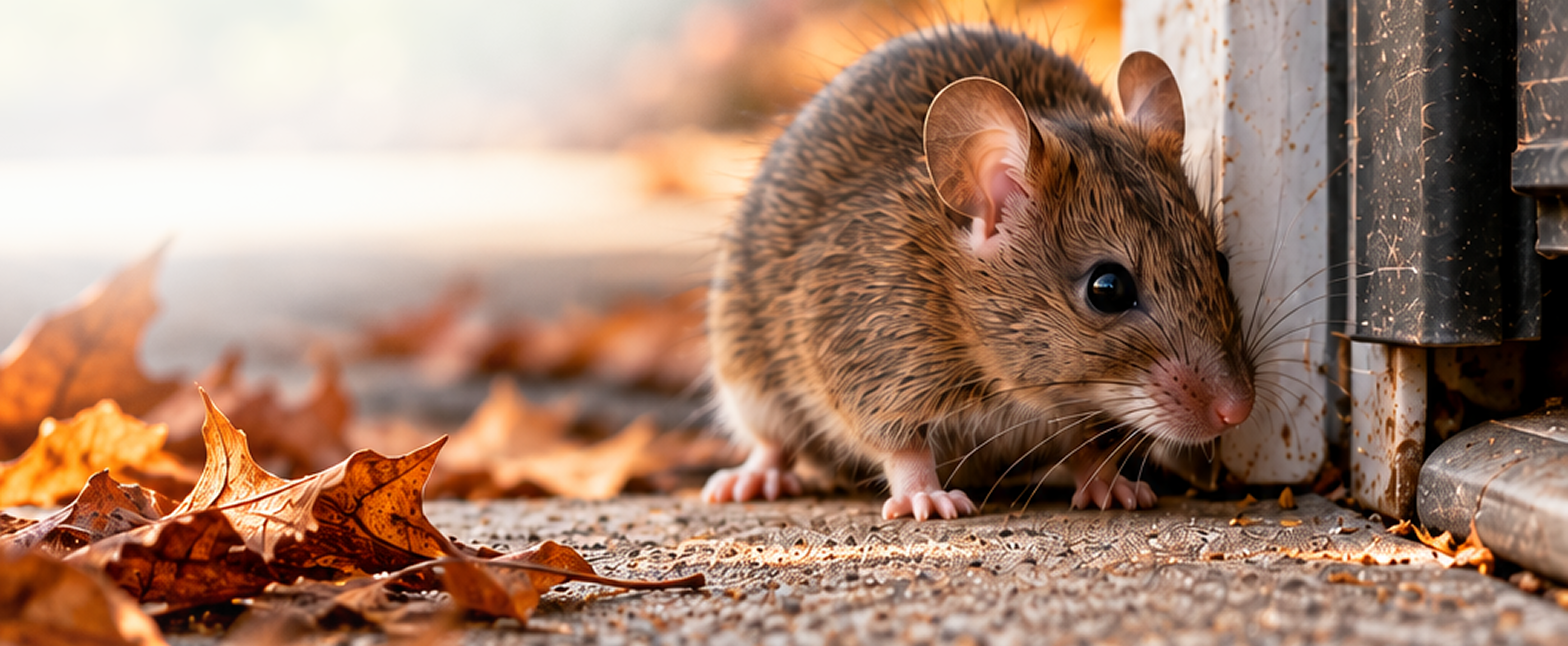
INSIDE THIS ISSUE
We will follow the problem from the yard to the rooms behind the door. We will look at why rodents may settle in before they are seen, which conditions make entry easier, how to read and clean up the signs they leave, and how indoor removal changes when pets share the space. Then we will bring those pieces together into one plan for the home.
A Rodent Problem May Begin Before You See It.
By November, darkness comes before many families have finished the day. The garage door closes against cooler air, and quiet spaces in sheds, crawl spaces, and storage rooms become more sheltered than the open yard.
House mice living outside commonly enter buildings as nighttime temperatures fall. Once inside, they may travel after the house grows quiet. That is why the first clue is often a sound, a dropping, or fresh damage to a package—not a mouse standing in the open.
A Note From Gene
As October moves into November, our technicians commonly find more signs associated with mice and rats throughout Southern Maryland and Northern Virginia.
That does not mean every home is affected or that every sound has the same cause. It does tell us that the change is worth watching. The earlier evidence is often small, and several ordinary details may need to be considered before we know whether a rodent passed through or has begun using the house.

Planet Friendly Pest Control

A Note From Gene
House mice can reproduce throughout the year when food and shelter remain stable. A mouse sighting alone does not establish a breeding population. A small indoor problem can still grow while most of the activity remains out of sight. Finding and understanding the early evidence usually leaves more choices than waiting for the signs to spread.

Free home rodent inspection
and FREE eBook
Single-family homeowners in Southern Maryland and Northern Virginia may request a free home rodent inspection through October 31, 2026.
When the inspection is requested, Planet Friendly will send the FREE Digital eBook, “Pets and Pest Control: What Every Pet Family Should Know.”
Make the Trip from Yard to House More Difficult
A mouse or rat does not need a neglected home. It needs some useful combination of food, water, shelter, and access. Those conditions may sit several feet apart and still work together.
The first part of prevention is to make the area around the house less useful. The second is to close practical routes into the structure. One without the other can leave part of the problem in place. A repaired opening will not remove the outdoor food or cover drawing rodents close. Cleaning the yard will not close a gap beneath a door.
Rodents may feed in one place, travel beneath cover, and enter somewhere else. The important details do not always sit together. They form a path when the property is viewed as a whole.
This is why rodent prevention usually begins outside and moves toward the building. The work is not to make every part of a property bare. It is to find the few conditions that place reliable resources or cover beside a possible route indoors.
Four places worth checking
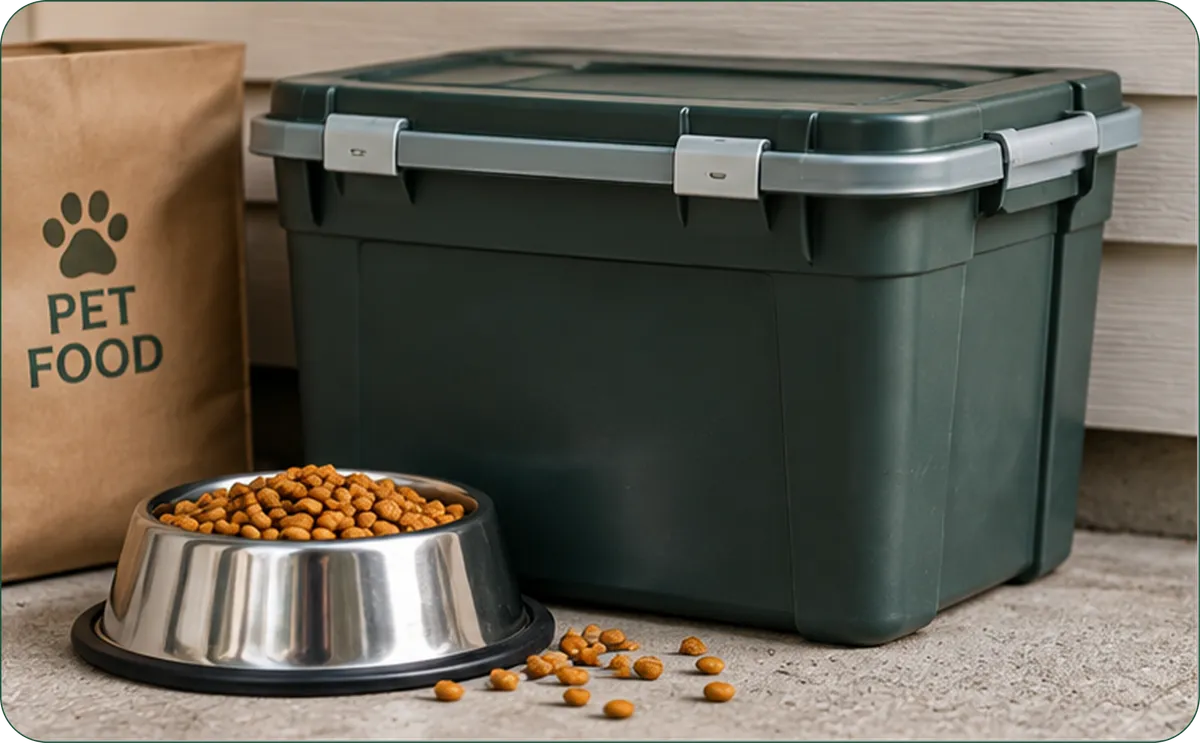
Stored food.
Keep pet food, birdseed, and similar materials in sound containers with tight-fitting lids. Check the floor beneath shelves and feeding areas for spilled pieces that may otherwise remain unnoticed.
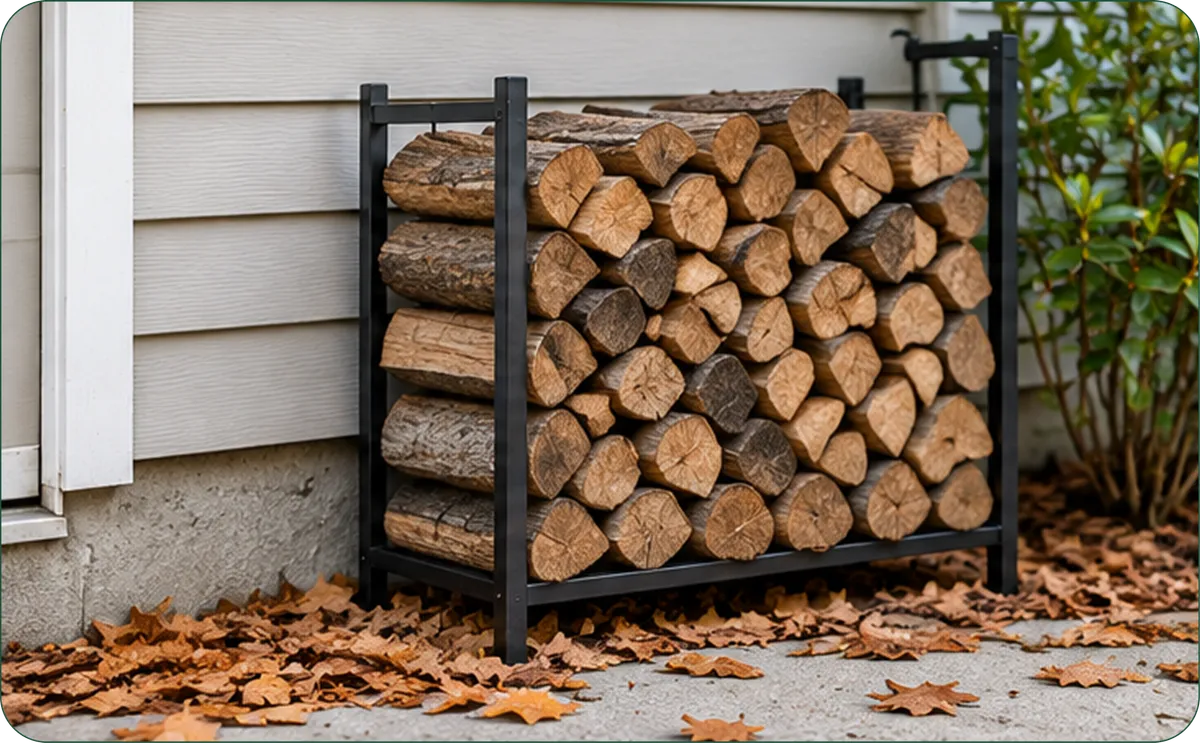
Exterior cover.
Move firewood away from the structure when practical. Clear heavy leaf buildup where it rests against a foundation, garage, or shed.
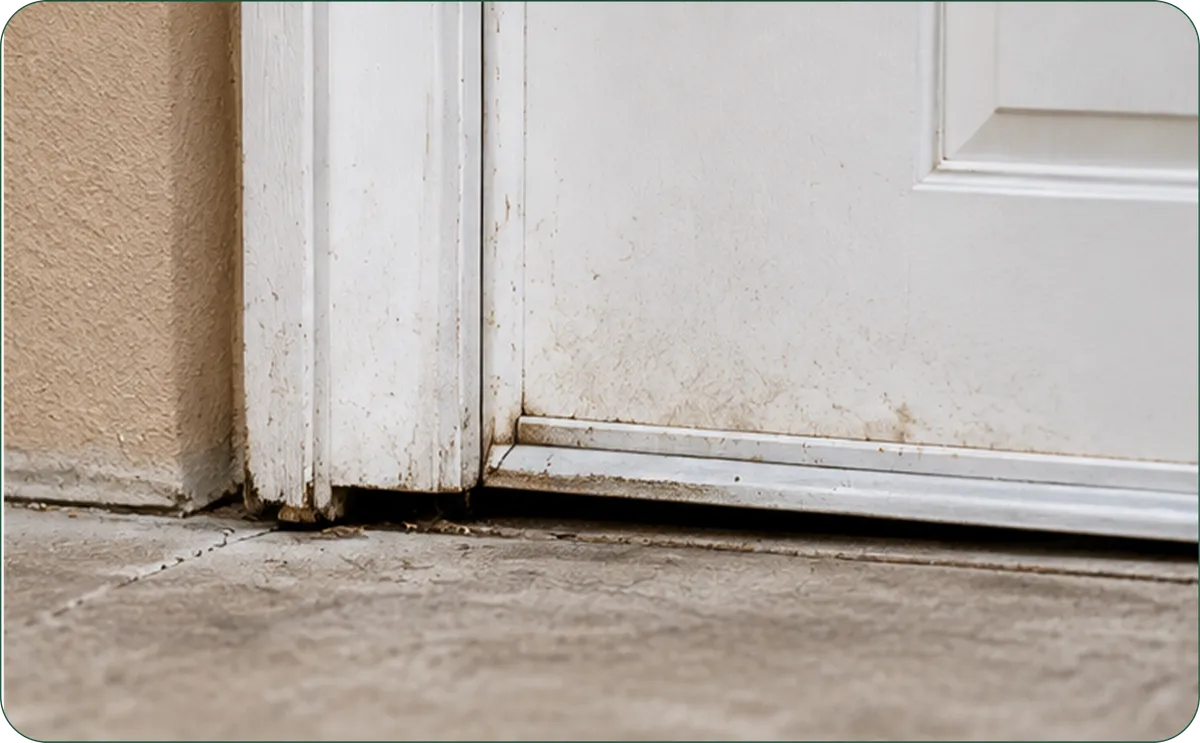
Lower door corners.
Close the door and look for a worn sweep, damaged edge, or thin line of daylight.
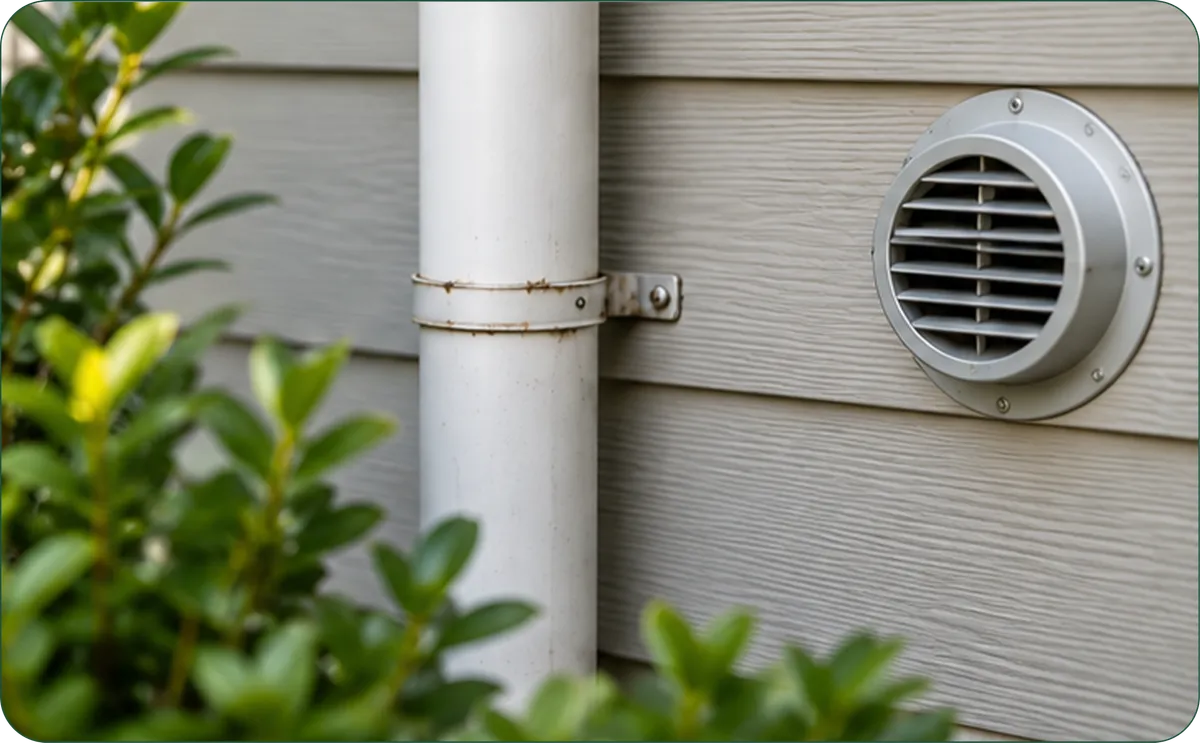
Pipes and vents.
Look where utility lines, hose bibs, vents, and other materials pass through an exterior wall. Mice can use openings about one-quarter inch wide, so a small gap deserves a proper repair.
Repair or active route?
A damaged sweep or open pipe collar may be nothing more than a maintenance need. It becomes more important when fresh evidence appears on the other side or follows a line toward it. An inspection can compare the opening with sheltered travel edges outside and related signs indoors. That helps determine whether the opening is simply vulnerable or is part of a route being used.
Daylight at a lower door corner shows a repair need, but it does not prove that rodents are using the opening.
The next step is to look at the conditions that may help a rodent reach the house and give it a reason to remain nearby.
The Evidence Matters Before Cleanup Begins
A few droppings beside a garage wall show that a rodent has been present. They do not, by themselves, show when the animal was there or how many may be inside.
A few droppings beside a garage wall show that a rodent has been present. They do not, by themselves, show when the animal was there or how many may be inside.
The surrounding pattern tells more. Fresh gnawing on a package, nesting material behind stored boxes, tracks through dust, or evidence that returns after safe cleanup may point to current activity. An old mark that does not change tells a different story.
Before moving boxes or wiping the area, look at how the signs are arranged. A short line along a wall may lead toward food, shelter, or a possible opening. The purpose is not to diagnose the whole problem from one clue. It is to preserve the details that can help separate old evidence from something still underway.
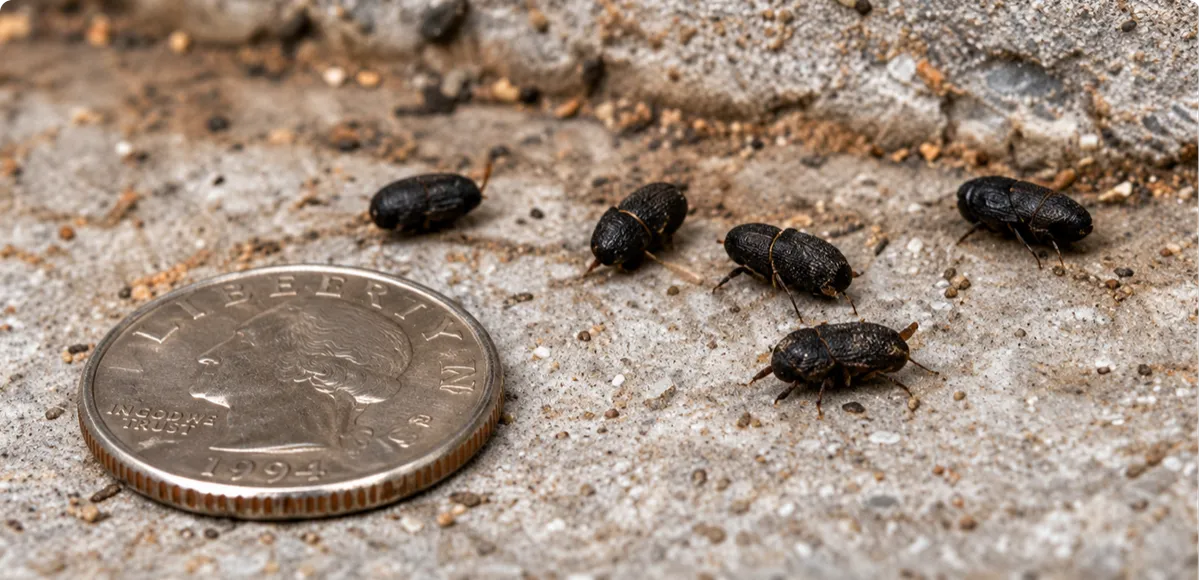
Record what you found
Note the exact place and date. Record nearby damage and whether anything in the area recently changed. Take a photograph from a safe position. After proper cleanup, watch for new evidence in the same place. A returning pattern is more useful than a guess made from one dropping.
Cleaning a small, accessible area
Do not sweep or vacuum dry droppings, urine, or nesting material.
Clean the surrounding hard surface. Wash your gloved hands before removing the gloves, then wash your bare hands with soap and warm water.
If the enclosed space can be ventilated safely, open doors and windows for 30 minutes and leave the area while it airs out.
Put on rubber or plastic gloves.
Wipe up the material with paper towels and place the waste in a covered trash container.
Wet the material thoroughly with a household product labeled as a disinfectant. Leave it wet for five minutes or for the time stated on the label.

Know when to stop
Heavy contamination, a large nest, an inaccessible crawl space, or evidence inside heating and cooling ducts requires added precautions. Do not enter or begin cleaning a space you cannot handle safely. A qualified professional or local health department can help determine the next step.
Keep children and pets away from rodent waste and the cleanup area. Follow the disinfectant label before allowing them to return, including any direction about contact time, ventilation, or drying.
Droppings following a wall may suggest where activity occurred, but they do not show how large the indoor problem may be.
Safe cleanup removes the evidence in front of you. It does not remove rodents that may still be using the house.
Removing What Is Already Inside
When fresh signs continue indoors, the next job is to reduce the rodents that remain. The method has to match the animal and the places it is using. Mouse traps and rat traps are different sizes. A device set in an open room may be ignored, while one placed along an active edge or behind an object may intercept the route the animal already follows.
Traditional snap traps are often a practical first tool for rodents inside a home. They allow the result to be seen and monitored. The number and location of devices should follow the current evidence, and each one should be checked until captures stop and fresh signs no longer return.
The confirmed entry route still needs to be corrected, but the timing matters. Closing an opening without accounting for rodents already inside may shut the route while leaving animals indoors. Indoor removal, monitoring, and repair should support one another rather than happen as unrelated steps.
Where pets move changes the plan
A location that appears hidden to a person may be easy for a cat to reach behind a cabinet. A dog may nose along the same mudroom wall each time it comes inside or investigate any new object placed near its food.
Before devices are set, note the doors pets use, where they eat and rest, and which storage areas they can enter. This does more than identify where food may be available. It shows where a trap or other device cannot be placed without added protection.
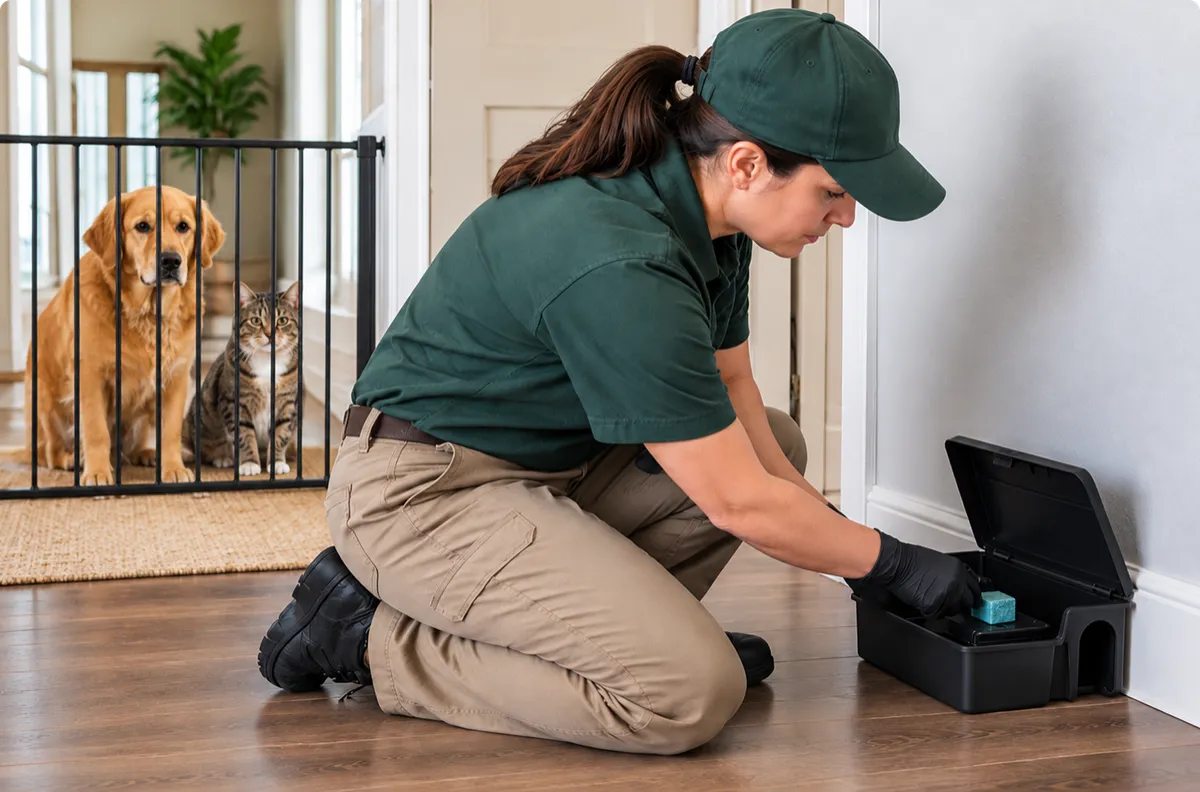
Traps, bait, and access
Use the correct trap for the rodent and follow its instructions. Traps and baits must be placed where children and pets cannot reach them. If a rodenticide is used, use only an EPA-registered product and follow the label. An enclosed bait station can reduce access to bait, but it does not replace careful placement. Remove dead rodents promptly while following safe handling directions.
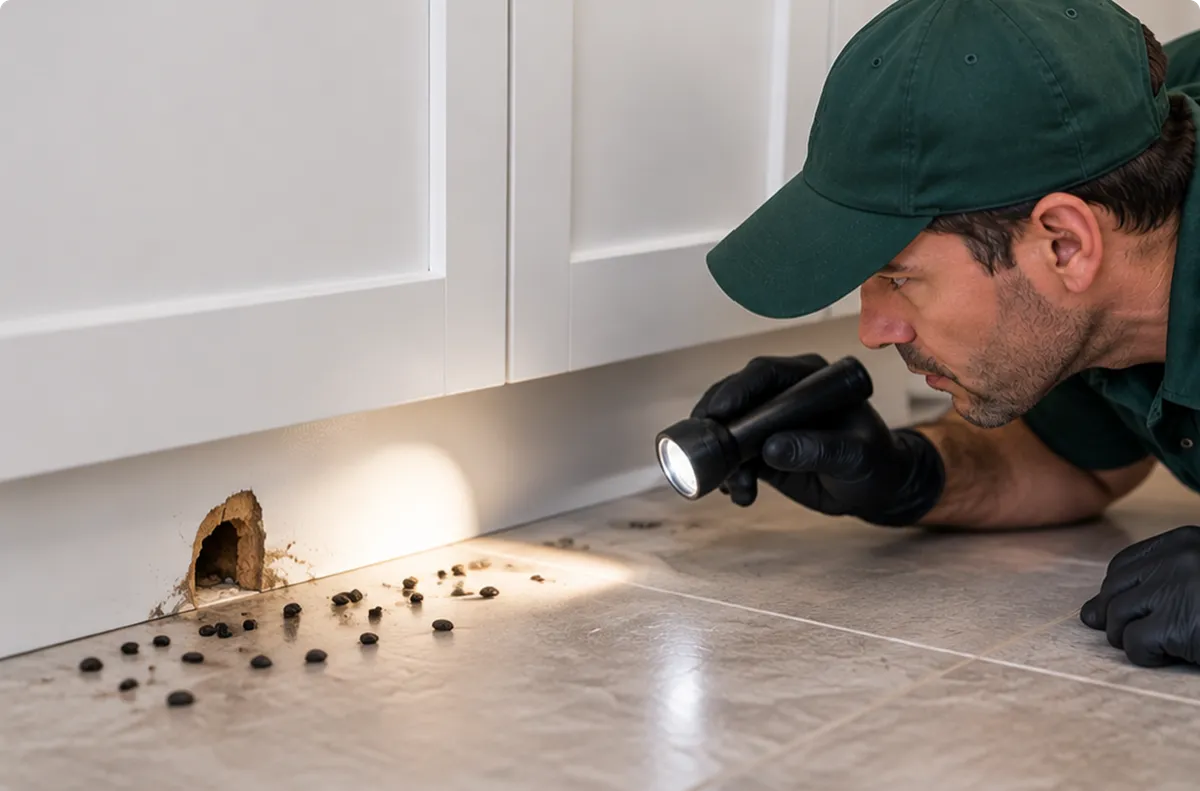
What an indoor inspection helps determine
The technician needs to identify the likely rodent, find where signs are current, and learn how far the activity may extend. Prior repairs, trapping, moved storage, and pet or child access can change the plan. Those facts help determine which tools fit and where they can be used.
This secured enclosure helps limit access to the trap from the open room. Its placement must still account for children and pets.
The Right Plan Depends on What the House Shows
Two homeowners may each see a mouse cross an attached garage. At the first home, the overhead door had stood open while groceries were carried inside. A close check finds no related signs. The door closes tightly, and stored materials are sound. Watching the area may be enough.
At the second home, new signs appear after proper cleanup and follow a protected edge toward an opening around a pipe. A pet uses the same part of the garage each day. That home requires more than observation. The work must account for what may already be inside, where removal tools can be placed, and when the opening should be corrected.
An inspection puts these facts into a useful order. It helps determine the likely rodent, the routes that matter, whether the signs are current, how the household uses the space, and what has already been tried. The result may include a repair, a storage change, monitoring, indoor removal, targeted treatment, or no treatment where none is needed.
There is no single rodent treatment that fits every property because the evidence, access, and household conditions are not the same at every home.

Working toward a rodent-free home
That goal is not reached by placing one device and forgetting it. It comes from finding the parts of the problem that are present at this home, correcting what can be corrected, and using only the additional pest control work the evidence supports.
Request your FREE home rodent inspection
Homeowners in Southern Maryland and Northern Virginia may request a free home rodent inspection by November 30. If you would like help putting the signs, possible routes, and household needs together, the inspector will review the findings and any recommended work with you.
When the inspection is requested, Planet Friendly will also send the FREE digital eBook, “Pets and Pest Control: What Every Pet Family Should Know.” You may call, visit the November page.